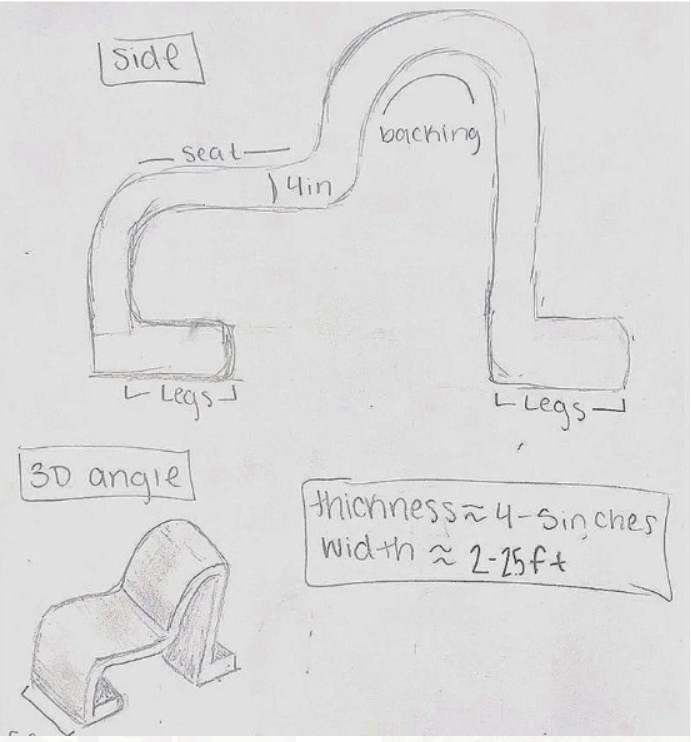
Concrete chair: original design, focused on curves and human positioning.
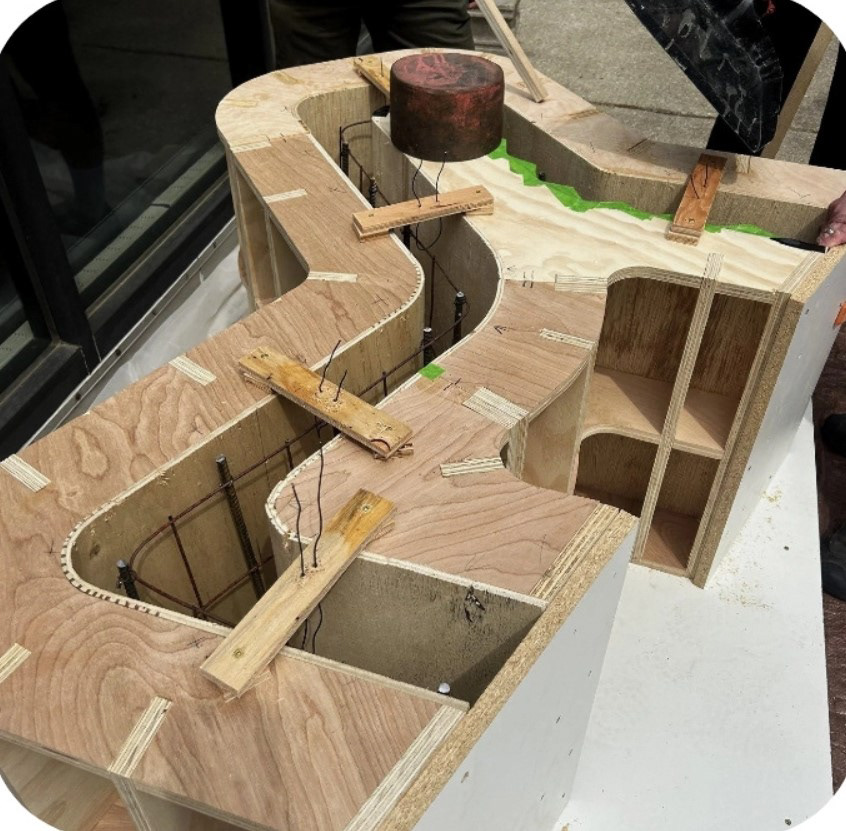
Concrete chair: CNC wooden mold and barb wire interior support.
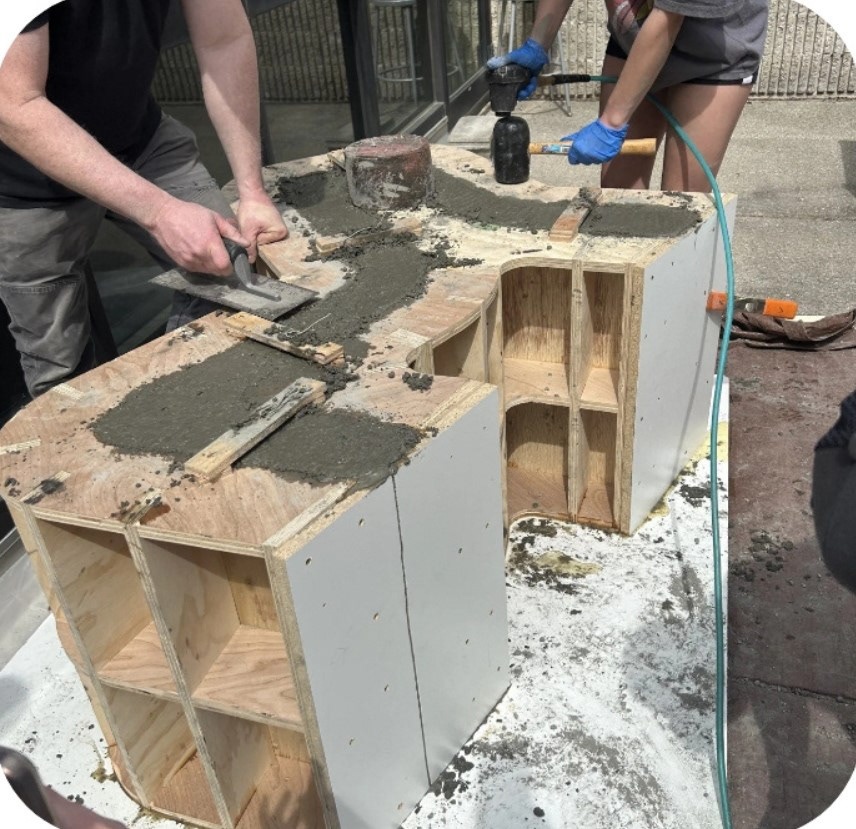
Concrete chair: Post concrete pour, breaking up air bubbles and smoothing surface layer.
CNC-Cut Wooden Formwork
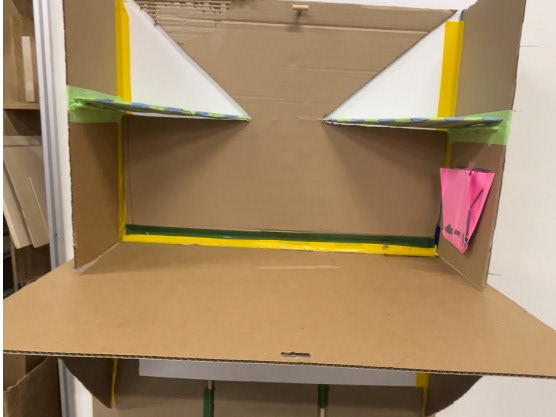
The formwork was fabricated using CNC-cut plywood panels derived from a digital CAD model. The design was divided into five interlocking components, allowing for efficient assembly and disassembly after casting.
The formwork was fabricated using CNC-cut plywood panels derived from a digital CAD model. The design was divided into five interlocking components, allowing for efficient assembly and disassembly after casting.
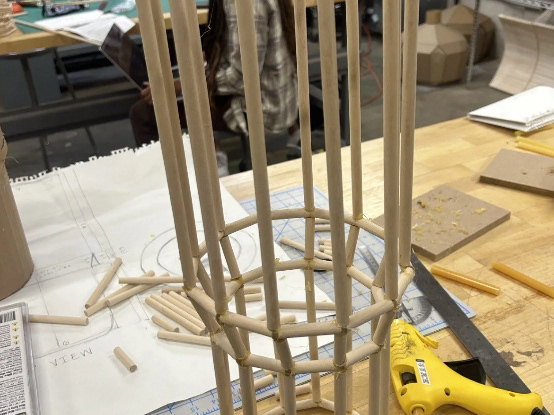
Internal Wooden Rib Structure
A series of vertical wooden ribs were integrated throughout the formwork to reinforce the structure. These ribs ensured stability and maintained the intended geometry under the lateral pressure exerted by the wet concrete during casting.
A series of vertical wooden ribs were integrated throughout the formwork to reinforce the structure. These ribs ensured stability and maintained the intended geometry under the lateral pressure exerted by the wet concrete during casting.
Embedded Metal Reinforcement
A metal wire framework was incorporated within the formwork as internal reinforcement. This added tensile strength to the final concrete piece, improving its structural integrity and durability.
A metal wire framework was incorporated within the formwork as internal reinforcement. This added tensile strength to the final concrete piece, improving its structural integrity and durability.
FINAL PRODUCT
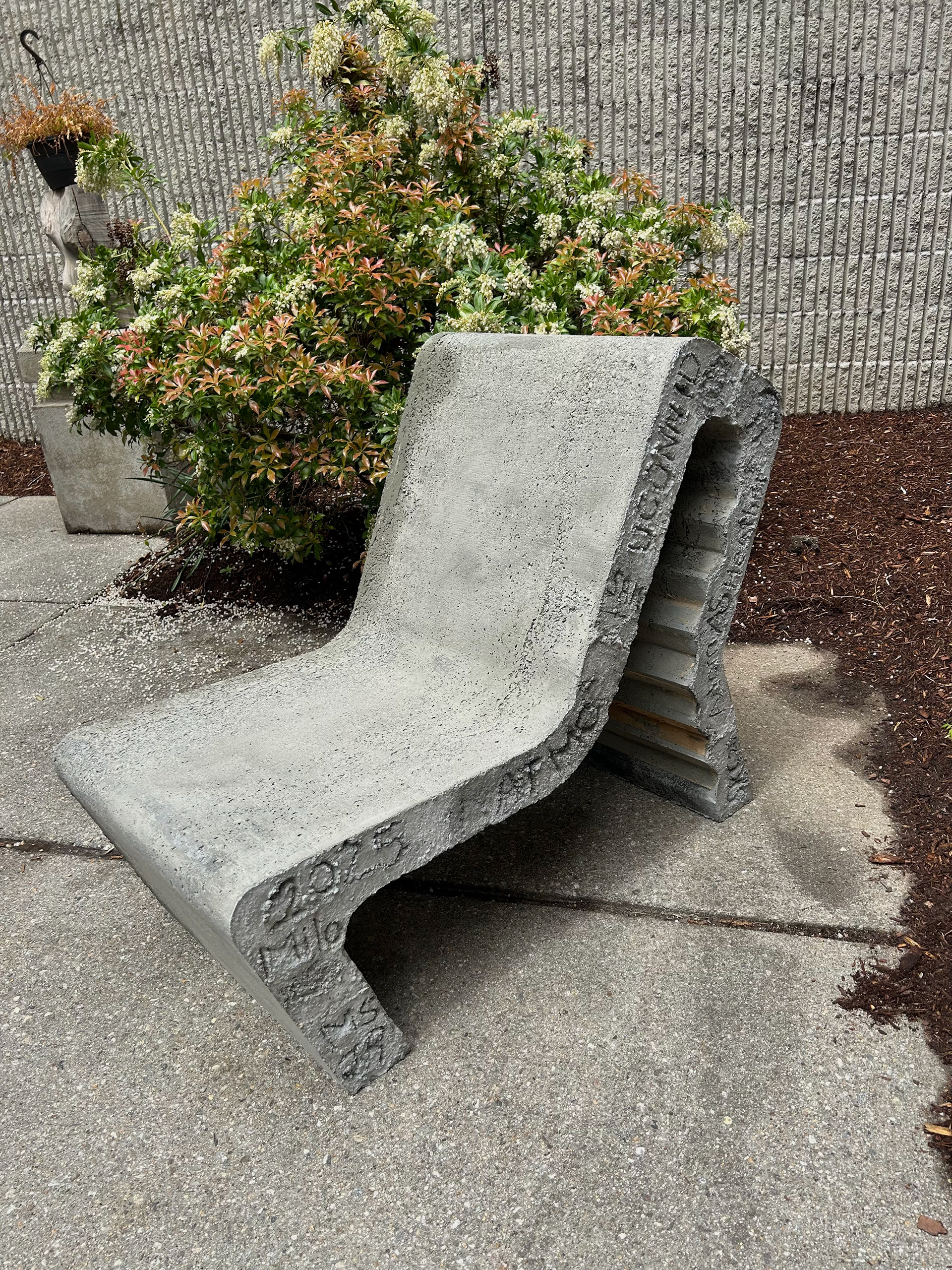
Final Design:
This concrete chair merges sculptural expression with an industrial material, as a flowing curve transitions seamlessly from backrest to seat, creating a unified form that emphasizes both comfort and movement.
Drawing inspiration from the relaxed geometry of an Adirondack-style chair, the design offers a gently reclined seating position while maintaining supportive back alignment. The subtly contoured seat enhances ergonomic comfort, softening the rigidity associated with concrete.
The final piece highlights the contrast between material weight and visual fluidity, transforming concrete into an inviting and human-centered form.
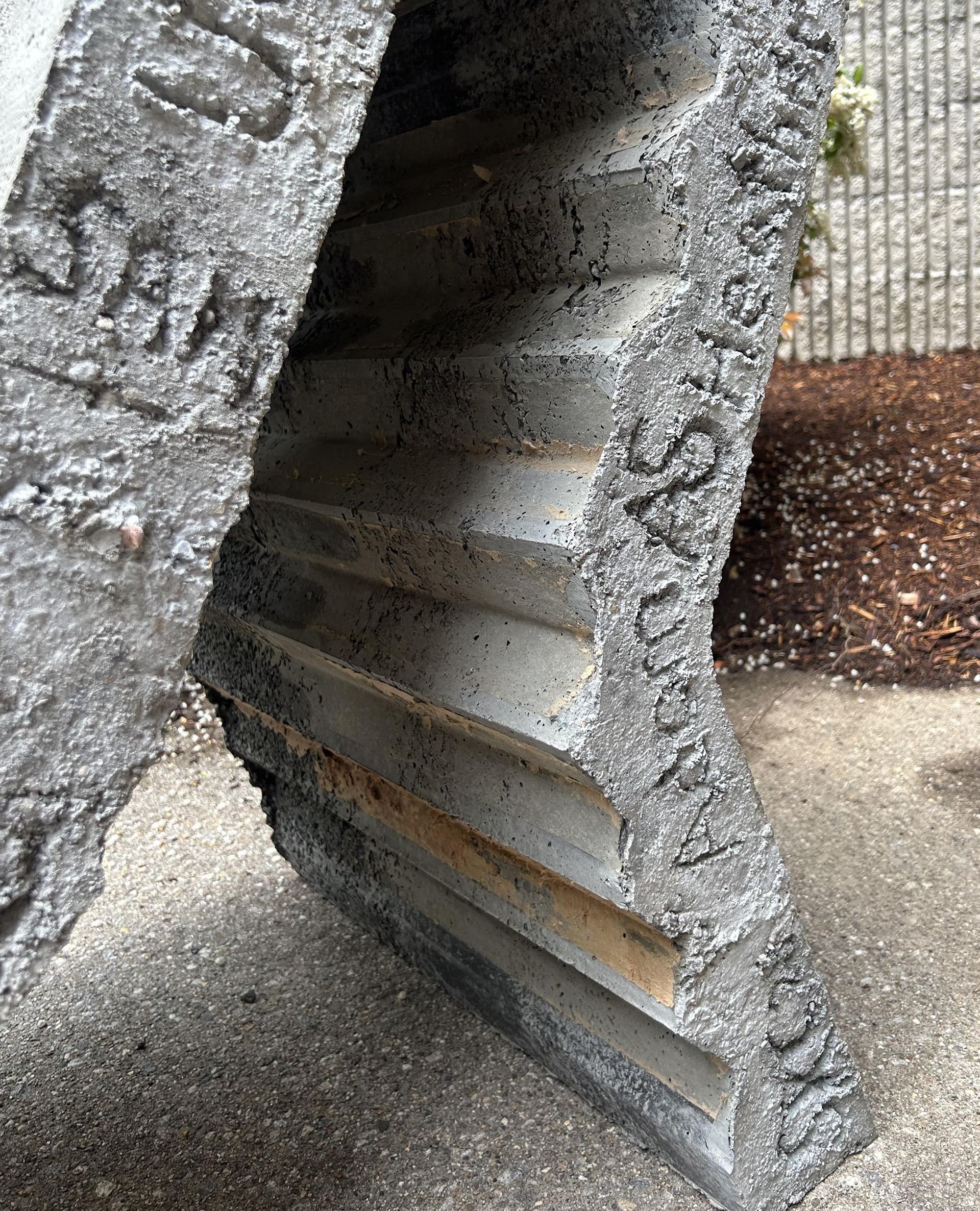
Texture:
The underside of the chair features a series of sharp, triangular grooves. This geometric pattern introduces a rhythmic visual, breaking up the form while emphasizing precision and craftsmanship.
The textured underside contrasts with the smooth, continuous surfaces of the seat and backrest, highlighting the interplay between refinement and raw material expression. Beyond aesthetics, these grooves reduce visual weight, giving the chair a lighter, more dynamic presence.